
Environmental Benefits of Asphalt Paving
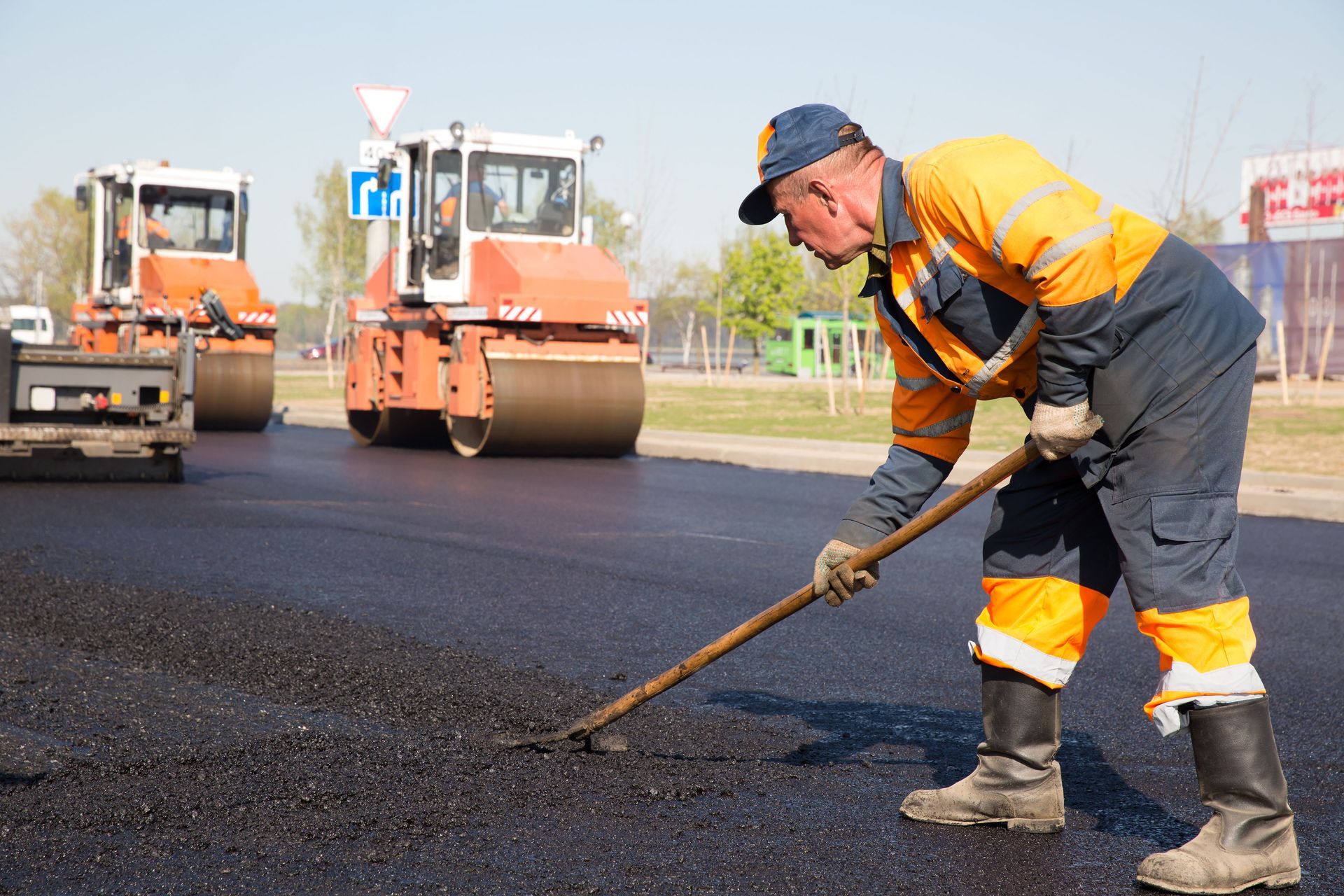
Asphalt paving is often viewed solely as a practical solution for roads, driveways, and parking lots, but it also offers significant environmental advantages. By understanding these benefits, property owners and municipalities can make more sustainable choices while maintaining durable surfaces. Below, we explore the ecological advantages of asphalt, with a focus on commercial applications.
Recyclability Reduces Waste
One of the most compelling environmental benefits of asphalt is its recyclability. According to the European Asphalt Pavement Association, asphalt is 100% recyclable. Old asphalt from roadways, parking lots, and driveways can be milled and reused to create new pavement, drastically reducing the need for virgin materials. This process not only conserves raw resources but also minimizes the environmental footprint of new pavement production.
Benefits of asphalt recycling include:
- Reduced landfill use, keeping waste out of the environment
- Lower energy consumption compared to producing new materials from scratch
- Preservation of natural resources like aggregates and bitumen
- Reduced greenhouse gas emissions associated with extraction and manufacturing
Commercial asphalt paving projects often utilize recycled asphalt, ensuring that large-scale surfaces contribute to a circular economy rather than a linear, waste-producing process. When properly processed, recycled asphalt performs similarly to virgin asphalt, maintaining the durability, smoothness, and load-bearing capacity that businesses require. In addition, incorporating recycled materials can reduce project costs and support sustainability certifications for environmentally responsible construction.
Energy Efficiency in Production
Asphalt production has become increasingly energy-efficient due to advancements in hot mix, warm mix, and cold mix technologies. Warm mix asphalt, for example, allows paving materials to be mixed and laid at lower temperatures, reducing fuel consumption and greenhouse gas emissions.
Key energy-saving strategies include:
- Using reclaimed asphalt pavement in new mixes
- Reducing heating temperatures during mixing and laying
- Optimizing transportation routes to limit fuel use
Commercial asphalt paving projects benefit greatly from these energy efficiencies. By implementing modern techniques, large parking lots, industrial sites, and roadways are constructed with less energy consumption while still meeting performance requirements.
Durability Minimizes Environmental Impact
Long-lasting pavement reduces the environmental footprint associated with frequent repairs and replacements. Asphalt is known for its flexibility, which helps resist cracking caused by temperature fluctuations, traffic loads, and weather conditions.\
Environmental advantages of durable asphalt include:
- Fewer materials needed over time due to reduced repair cycles
- Less disruption to natural habitats and urban environments
- Lower emissions from construction machinery used in maintenance
Commercial asphalt paving projects, which often cover vast areas, benefit particularly from this durability. By choosing asphalt, businesses can avoid repeated repaving, ultimately reducing their overall environmental impact and operational costs.
Urban Heat Island Reduction
Asphalt has traditionally been criticized for contributing to urban heat islands, but modern paving strategies can mitigate these effects. Reflective coatings, lighter-colored aggregates, and permeable designs can help absorb less heat, reducing local temperature spikes.
Benefits of heat-reducing asphalt include:
- Lower energy use in nearby buildings due to cooler surroundings
- Reduced greenhouse gas emissions from decreased cooling demand
- Improved comfort for pedestrians and vehicles in commercial areas
Commercial paving can integrate these techniques to balance performance and environmental considerations. By selecting appropriate materials and surface treatments, large-scale projects contribute less to urban heat while retaining the functionality of conventional asphalt surfaces.
Stormwater Management and Permeability
Traditional asphalt is impermeable, but innovative permeable asphalt options allow water to pass through the surface, reducing runoff and improving groundwater recharge. Permeable asphalt is particularly useful in commercial applications, where large paved areas often contribute to flooding and pollution of stormwater systems.
Environmental benefits of permeable asphalt include:
- Reduction in surface runoff that carries pollutants into rivers and lakes
- Decreased need for stormwater infrastructure, saving materials and energy
- Enhanced groundwater replenishment, supporting local ecosystems
Commercial asphalt paving projects, such as large parking lots, can integrate permeable sections to manage stormwater sustainably. Even partial implementation of permeable asphalt can significantly improve environmental performance without sacrificing load-bearing capacity.
Resource Conservation Through Material Selection
Asphalt relies on aggregates, bitumen, and other additives, but using recycled or locally sourced materials conserves resources and reduces transportation emissions. By minimizing the need to extract and transport new raw materials, asphalt production and installation become significantly more sustainable.
Key resource conservation strategies include:
- Incorporating recycled asphalt pavement in new projects
- Sourcing aggregates from nearby quarries
- Using warm mix techniques to reduce energy use
Commercial paving benefits from these approaches, particularly on large projects. Recycling and local sourcing reduce the carbon footprint associated with material procurement while ensuring the pavement meets heavy-duty performance standards.
Reduced Emissions From Smooth Surfaces
Smooth asphalt surfaces contribute to environmental benefits by lowering vehicle emissions. Less roughness means less rolling resistance for vehicles, which translates to lower fuel consumption and reduced greenhouse gas emissions.
Benefits of smooth asphalt include:
- Improved fuel efficiency for vehicles traveling on commercial roads and parking areas
- Reduced wear and tear on vehicles, extending their lifespan
- Decreased air pollution in urban and industrial areas
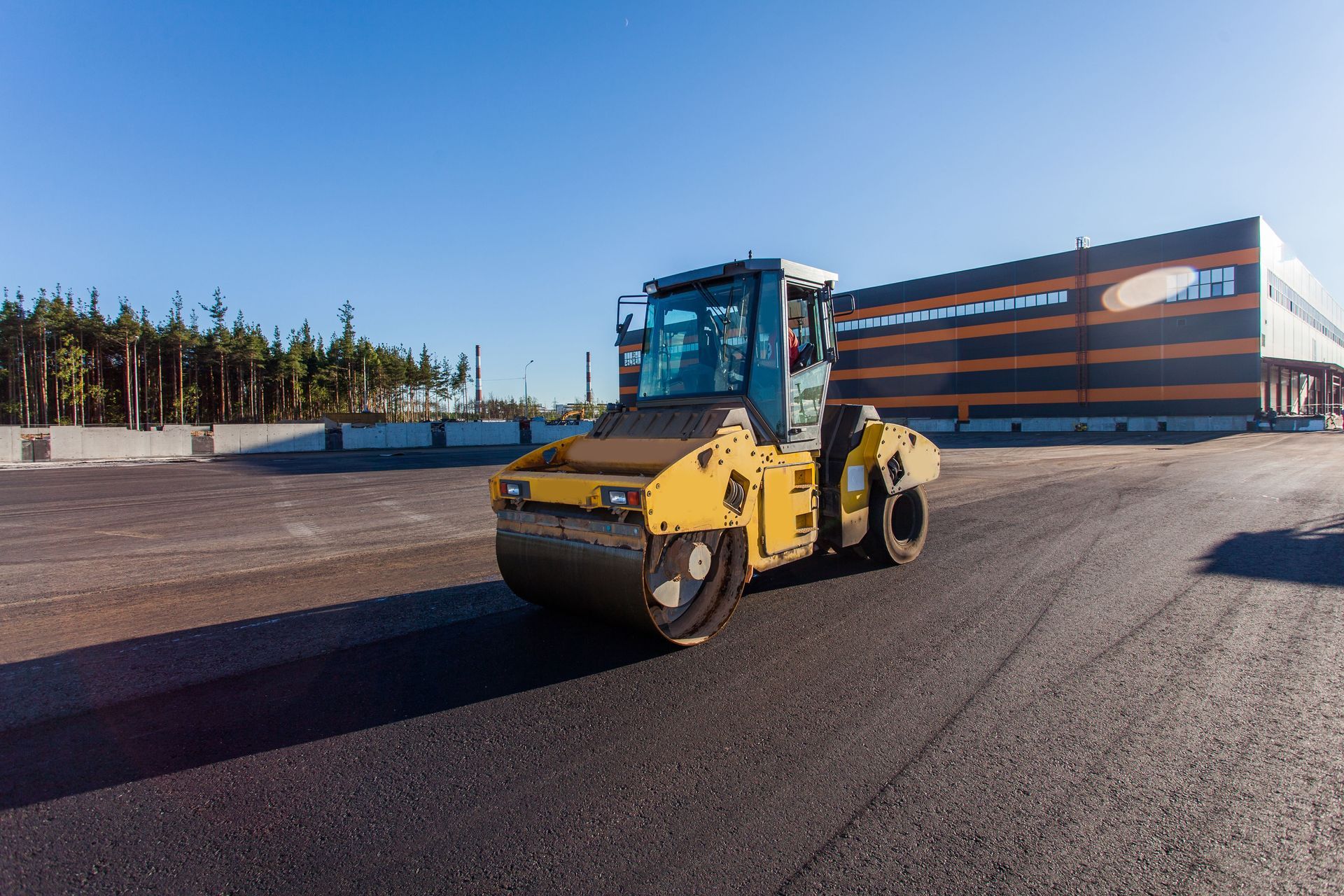
For commercial asphalt paving projects, ensuring a smooth, well-compacted surface not only benefits operational efficiency but also contributes to sustainability goals by minimizing transportation-related emissions.
Noise Reduction and Community Health
Asphalt has acoustic advantages over other paving materials. Smooth asphalt reduces tire noise, which contributes to quieter neighborhoods and commercial zones. Lower noise levels benefit both human health and urban wildlife, reducing stress and improving overall quality of life.
Environmental and community benefits include:
- Reduced noise pollution from traffic in business districts
- Lower stress and improved well-being for employees and residents
- Indirect energy savings as quieter environments may reduce the need for soundproofing materials
Commercial paving can incorporate noise-reducing mixes, particularly in high-traffic areas. By combining acoustic and sustainability benefits, large-scale paving projects enhance both environmental quality and community livability.
Flexibility Facilitates Maintenance and Upgrades
Asphalt’s flexible nature allows for easier maintenance, repairs, and upgrades compared to rigid surfaces like concrete. This flexibility reduces the environmental impact of reconstruction by requiring fewer materials, less energy, and less labor.
Key maintenance and upgrade strategies include:
- Milling and overlaying old asphalt instead of full removal
- Using patching techniques for localized damage
- Integrating new materials with recycled asphalt for cost and energy efficiency
Commercial paving projects particularly benefit from this adaptability. Large-scale lots and roadways can be maintained efficiently without complete replacement, extending the life of the pavement while minimizing the environmental footprint of construction activities.
Supporting Sustainable Urban Planning
Asphalt plays a critical role in sustainable urban planning when combined with smart design strategies. Properly designed asphalt pavements support pedestrian zones, bike lanes, and green spaces, contributing to environmental and social sustainability.
Benefits of integrating asphalt into urban sustainability include:
- Efficient land use and reduced impervious surface area
- Integration with stormwater management and permeable surfaces
- Support for multi-modal transportation networks, encouraging lower-carbon commuting
Commercial paving, when applied thoughtfully, supports these sustainable planning goals. By aligning paving projects with broader environmental and urban strategies, cities and businesses can balance durability, utility, and ecological stewardship.
Asphalt paving provides a range of environmental benefits, from recyclability and energy efficiency to stormwater management and reduced emissions. By choosing sustainable practices, materials, and designs, property owners and municipalities can construct long-lasting surfaces that minimize ecological impact. Thoughtful commercial paving not only meets functional needs but also contributes meaningfully to environmental responsibility and urban sustainability. If you need a professional commercial asphalt paving company, contact Asphalt Solutions, Inc today to learn more and get started!
Share On: